
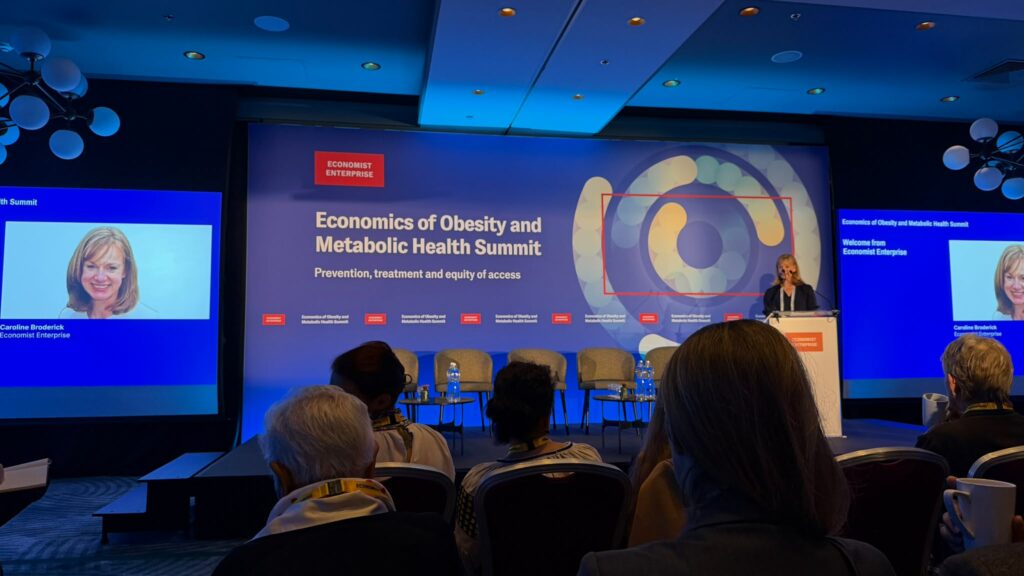
Last week, The Economist brought together policymakers, clinicians, researchers, and pharmaceutical leaders in Brussels for the Economics of Obesity and Metabolic Health Summit.
The conversation centered on how medicine, policy, and industry are rethinking obesity — not as a personal failure, but as a chronic, complex condition that demands a coordinated clinical response.
One area that deserves more space in that conversation: what happens after the weight is lost.
Weight loss is not the end of the journey. For many patients, it is the beginning of a new set of challenges.
Significant weight loss — whether achieved through lifestyle change, bariatric surgery, or GLP-1 medications — frequently leaves behind excess skin and tissue that does not resolve on its own. Redundant skin across the abdomen, arms, thighs, and chest can cause chronic skin infections, rashes, hygiene difficulties, and persistent physical discomfort. For many patients, it limits mobility and exercise — the very behaviors that support long-term weight maintenance.
This is not a cosmetic concern. It is a functional one. And it is one that the broader weight loss conversation tends to overlook.
GLP-1 medications are accelerating this issue at scale.
These drugs are producing rapid, significant weight loss in a growing number of patients. That is a meaningful clinical advance. But speed of weight loss is one of the key factors associated with greater skin laxity — meaning that as more patients achieve dramatic results with GLP-1 therapy, more will face the downstream physical consequences that body contouring surgery is specifically designed to address.
The surgical field is actively working through questions around optimal timing, patient selection, nutritional status after rapid weight loss, and how to integrate plastic surgery into the broader post-bariatric care pathway. Conferences like the one in Brussels are where these cross-disciplinary conversations need to happen.
Plastic surgery also plays a direct role in surgical safety for patients who have not yet completed their weight loss journey.
A BMI above 30 significantly elevates the risk of surgical complications — wound infections, blood clots, healing delays. This means that for patients seeking procedures like breast reduction or abdominoplasty, the path to safe surgery runs through weight optimization first. Research published in the Annals of Plastic Surgery has documented this risk directly in body contouring patients.
Understanding weight — where a patient is, how they got there, and where they are going — is not peripheral to plastic surgery. It is central to it.
The obesity conversation is maturing.
More specialties are recognizing that treating obesity well means caring for patients across the full arc of their experience — not just through the moment of weight loss, but through what comes after.
Plastic surgery has a more significant role in that arc than is commonly acknowledged. The more integrated that role becomes, the better the outcomes for patients navigating one of the most physically and psychologically complex health journeys there is.
Dr. Itay Wiser, MD PhD | Plastic Surgeon | New York City
Dr. Itay Wiser, MD PhD | Plastic Surgeon | New York City