

Gynecomastia Surgery Scars: When Longer Incisions Are the Right Choice
One of the first questions men ask before gynecomastia surgery is about scarring. And the honest answer — the one most websites avoid giving — is that it depends entirely on what your chest actually needs.
Most gynecomastia surgeries do leave very small, well-hidden scars. But some cases require longer incisions. When they do, that longer scar isn’t a failure of technique. It’s the correct surgical decision for that patient’s anatomy. Understanding the difference helps you ask better questions in your consultation and know what to realistically expect.
Why Incision Length Varies
Gynecomastia is not one condition — it’s a spectrum. Some men have mostly fatty tissue with good skin elasticity. Others have significant glandular tissue, loose skin, or chest changes after major weight loss. The surgical approach has to match what’s actually there.
There are three variables that determine incision length:
1. Tissue composition. Pure fatty gynecomastia can often be addressed with liposuction alone through a small puncture incision. Dense glandular tissue — the firm disc of breast tissue behind the nipple — requires direct excision through a longer opening.
2. Skin excess. If skin has stretched significantly and won’t retract on its own after tissue removal, it needs to be surgically removed. That requires a longer incision than glandular excision alone.
3. Nipple position. When significant skin is removed, the nipple may need to be repositioned to sit correctly on the new chest contour. This too requires a more extended approach.
Incision Types — and When Each Is Used
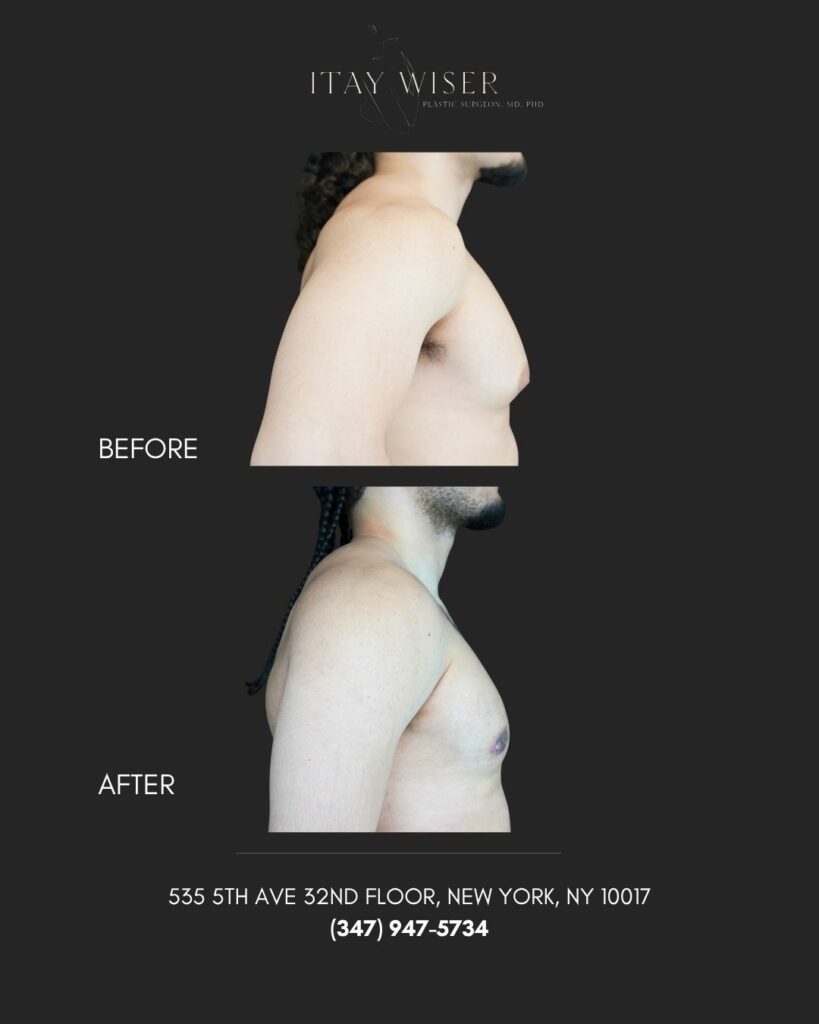
Periareolar incision (semicircle around the areola).
Used when: Glandular tissue needs direct excision. The incision follows the lower half of the areola border, where the color transition naturally camouflages the scar. Scar result: A fine curved line at the areola edge. One of the best-hidden scars in plastic surgery.
Inframammary or horizontal chest incision.
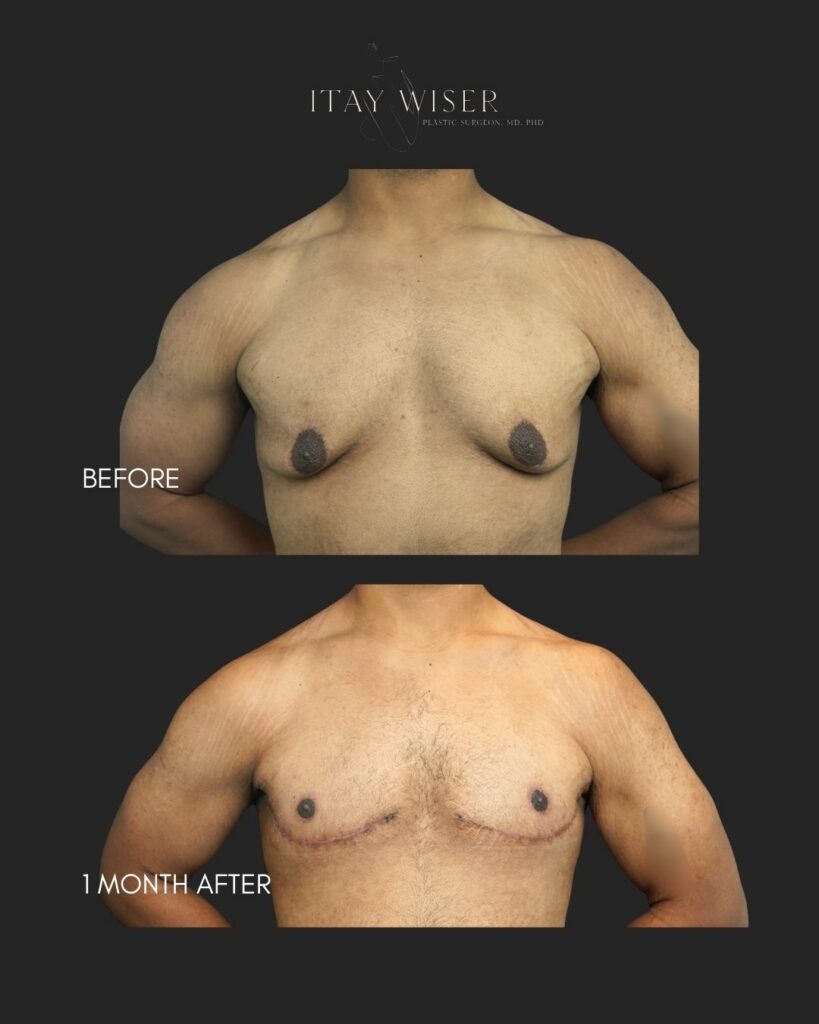
Used when: Significant skin excess — typically after major weight loss, in Grade 3–4 gynecomastia, or when previous surgery has left skin that cannot retract. The incision runs in the natural chest crease beneath the breast. Scar result: A longer, horizontal line. It sits in the crease and is hidden in most clothing and even shirtless positions. This is the least common approach and used only when the amount of skin removal genuinely requires it.
The Grading System and What It Means for Your Scar
Gynecomastia is classified in grades that help predict which surgical approach is appropriate:
Grade 1: Small enlargement, no excess skin. Liposuction or small periareolar incision. Minimal scarring.
Grade 2: Moderate enlargement, minimal skin excess. Periareolar excision with possible liposuction. Small, well-hidden scar.
Grade 3: Significant enlargement with moderate skin excess. Extended incision likely needed. Longer scar, but appropriate for the anatomy.
Grade 4: Severe enlargement with significant excess skin — often seen after major weight loss or in cases where gynecomastia has been present for many years. Skin removal required. Longer incision is the correct approach, not a compromise.
The goal is always the flattest, most masculine chest possible. In Grade 3–4 cases, a longer scar achieves that goal better than a shorter incision that leaves loose, redundant skin behind.
What Men Actually Care About: Will It Be Visible?
The honest answer depends on grade and technique — but a few things are consistently true:
Periareolar scars, even when they extend slightly, are remarkably well-hidden. The areola border is one of the best natural camouflage lines on the body.
Horizontal chest crease scars, while longer, sit in a shadow zone that disappears when standing. Most men are significantly less bothered by them than they expected — especially compared to how they felt about their chest before surgery.
Scars continue maturing for 12–18 months. What looks pink and visible at 6 weeks looks very different at 18 months with proper care.
Skin type, genetics, and aftercare all influence final scar quality. Men with darker skin or a history of keloids should discuss this specifically during consultation.
Scar Care After Gynecomastia Surgery
Regardless of incision type, the same principles apply:
Sun protection — fresh scars darken permanently with UV exposure. Keep incisions covered or use SPF 50+ once cleared by your surgeon.
Scar massage — gentle circular massage from week 4–6 onward improves softness and helps break down early scar tissue.
Avoid chest strain — no heavy pressing or pulling motions for 6 weeks. Tension on healing incisions widens scars.
If a scar heals poorly, options include steroid injections, laser treatment, microneedling, or in rare cases a minor scar revision. These are available at Dr. Wiser’s practice and discussed at follow-up visits.
The Trade-off Worth Making
The most common regret after gynecomastia surgery isn’t the scar. It’s not having the surgery sooner.
When a patient with Grade 3 gynecomastia has a periareolar-only approach to “minimize scarring,” the result is often a flat chest with excess skin hanging beneath the nipple. That outcome looks worse than the original problem — and leads to a revision with a longer incision anyway.
Dr. Wiser’s approach is to recommend the technique that produces the best chest — not the shortest incision. For many patients, those are the same thing. For some, they’re not. The consultation is where that decision gets made honestly, based on your specific anatomy, grade, and goals.
Schedule a Consultation in NYC
Dr. Itay Wiser performs gynecomastia surgery at his Manhattan practice, accepting most major insurance plans. The consultation includes a full assessment of grade, tissue composition, skin quality, and the most appropriate surgical approach — with a realistic discussion of what your scar will look like and how it will change over time.
Book a free consultation or call 347-947-5734.
Frequently Asked Questions
How do I know if I need skin removal?
Skin excess that won’t retract is assessed during consultation, often with a pinch test. Significant skin redundancy that won’t improve with tissue removal alone indicates that skin excision is needed.
Can I minimize my scar with the right surgeon?
Yes — precise technique, careful closure, and strategic incision placement all reduce scar visibility. But the underlying grade and skin quality set the floor. A good surgeon tells you honestly what’s possible, not just what you want to hear. Book a FREE consultation with Dr. Wiser
How long until my scar is fully healed?
Scars reach their final appearance between 12 and 18 months. The most dramatic improvement typically happens between months 3 and 9.
What if I develop a keloid?
Keloid history should be disclosed before surgery. If a keloid develops, treatment options are available.
Does gynecomastia surgery ever need to be redone because of scarring?
Scar revision for gynecomastia is rare when the correct technique is used initially. Revisions more commonly occur when the original surgery used too conservative an approach and left excess tissue or skin.